


Stargazing in the UK
Discover the dazzling stars at our dark skies campsite.
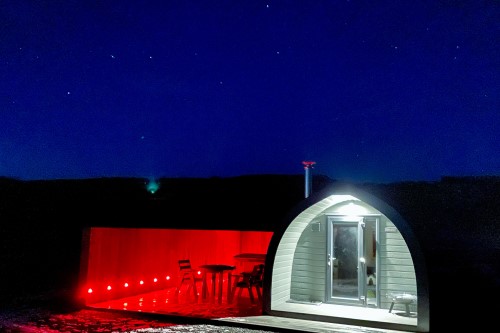
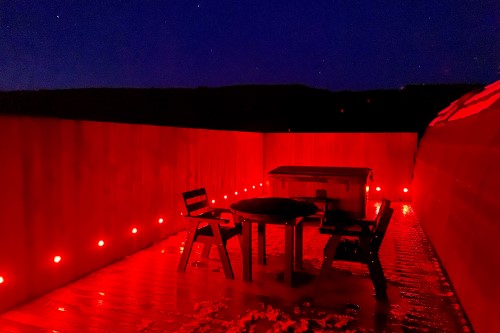
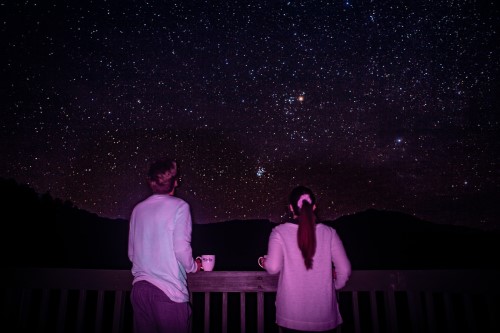
There’s something special about stepping outside on a clear evening and looking up at a sky full of stars.
Herding Hill Farm is ideally placed for enjoying Northumberland’s dark skies, whether you’re hoping to spot a meteor shower, look for familiar constellations or simply spend a little time stargazing from the campsite.
Throughout the year, there are different things to look out for in the night sky. Take a look at what’s coming up during your stay.
What can you see in the night sky?
21st October 2026 - Orionid Meteor Shower
Keep
an eye out for fast-moving shooting stars as the Orionid meteor shower reaches
its peak. The Orionids are associated with Halley’s Comet and are active from 2nd October to 7th November. Find out more here.
Look up for a particularly bright full moon as the first of three consecutive late-2026 supermoons appears in the night sky. Find out more here.
Early November 2026 - Taurid MeteorsThroughout early November, you may be lucky enough to spot some of the slow-moving meteors associated with the Taurid showers. The Northern Taurids reach their maximum around 12th November. Find out more here.
16th November 2026 - Mars and Jupiter
Early risers can look out for Mars and Jupiter appearing close together in the pre-dawn sky. Find out more here.
18th November 2026 - Leonid Meteor Shower
Another opportunity to look for shooting stars. The Leonids are known for fast, bright meteors and are active throughout much of November. Find out more here.
24th November 2026 - Beaver Supermoon
November brings another supermoon, giving you
another reason to look up during an evening at Herding Hill Farm. Find out more here.
14th December 2026 - Geminid Meteor Shower
One of the highlights of the annual stargazing
calendar. The Geminids are known for producing plenty of bright meteors and
reach their maximum around 14th December. Find out more here.
22nd December 2026 - Ursid Meteor Shower
Another chance to spot shooting stars just before Christmas. The Ursids are a smaller meteor shower, active between 17th and 26th December. Find out more here.
24th December 2026 - Christmas Eve Supermoon
Christmas Eve brings the third supermoon in the
late-2026 run. Find out more here.
3rd to 4th January 2027 - Quadrantid Meteor Shower
Start the new year by looking out for the Quadrantids. This is one of the major annual meteor showers, with the 2027 maximum expected on the 3rd to 4th January. Find out more here.
February & March 2027 - Winter stargazing
You don’t need a major astronomical event to enjoy the night sky. On a clear evening, wrap up warm, step outside and give your eyes time to adjust to the darkness.
Could you see the Northern Lights from Herding Hill Farm?
The Northern Lights can sometimes make an appearance, but unlike annual meteor showers, aurora displays can’t usefully be added to our calendar months in advance.
If you’re staying with us, keep an eye on the latest aurora and weather forecasts. If conditions look promising, wrap up warm, head outside and look towards the northern sky.
Remember: seeing meteor showers, stars and aurora is always dependent on conditions including cloud cover, moonlight and visibility.
Tips for stargazing during your stay
- Choose the clearest night of your stay.
- Move away from bright lights where it is safe to do so.
- Give your eyes time to adjust to the darkness.
- Wrap up warmly, particularly during autumn and winter.
- You don’t need a telescope to enjoy a meteor shower. Find somewhere comfortable and take in as much of the sky as possible.
Make dark skies part of your Northumberland break
From meteor showers and bright winter stars to the possibility of catching the Northern Lights, there’s always a reason to look up.
Explore Herding Hill Farm stays and enjoy a countryside escape close to Hadrian’s Wall, with Northumberland’s night skies waiting outside your door.
Frequently Asked Questions about Stargazing
When is the best time of year for stargazing at Herding Hill Farm?
Autumn and winter bring longer hours of darkness, but stargazing is possible throughout the year when skies are clear.
Can I see meteor showers from Herding Hill Farm?
Several annual meteor showers are visible from the UK. What you actually see will depend on conditions on the night.
Can you see the Northern Lights from Herding Hill Farm?
There may be opportunities when aurora activity reaches the UK, but a display is never guaranteed. Check a reliable aurora forecast close to your stay.
Do I need a telescope?
No. Many night-sky experiences, including meteor showers, can be enjoyed with the naked eye.
Stargazing at Herding Hill Farm
You don’t need an expensive telescope to enjoy Northumberland’s dark skies. On a clear night, simply wrap up warm, find a comfortable spot and look up. Binoculars can help you see more detail, and we also have stargazing kits available to hire if you don’t have your own.
Fire pits are available to hire too, so you can keep warm while enjoying the night sky from your accommodation or touring pitch. If you’re visiting with family or friends, our Camping BBQ Hut has outdoor space where you can enjoy the evening together.
Stargazing is also a lovely way to get children interested in the night sky. Read our guide to Stargazing for Kids in Northumberland for ideas to get them involved.
Where to go stargazing near Herding Hill Farm
You can enjoy the stars without travelling far, but there are also some fantastic dark-sky locations and observatories to discover nearby.
Cawfields
Less than a mile from Herding Hill Farm, Cawfields is a designated Dark Sky Discovery Site. Its location away from the worst local light pollution, good views of the sky and dedicated stargazing platform make it a great nearby option for a clear night.
If visiting after dark, take extra care around the quarry and use the dedicated stargazing platform. Overnight parking isn't permitted.
Kielder Observatory
Located within the Northumberland International Dark Sky Park, Kielder Observatory is a public astronomical observatory where visitors can learn more about the night sky and astronomy.
It's a great addition to a Northumberland break if you'd like to take your interest in the night sky a little further.
Twice Brewed Inn Stargazing
Close to Herding Hill Farm, Twice Brewed Inn offers stargazing experiences led by the Kielder Observatory team. Its location within the protected Dark Sky Park benefits from minimal light pollution, with telescopes and a planetarium available as part of its astronomy experiences.
We don't recommend walking back to Herding Hill Farm from Twice Brewed Inn after dark. The Military Road is unlit and does not have pavements.
Battlesteads Dark Sky Observatory
Located at Wark on the edge of Kielder Water & Forest Park, Battlesteads Dark Sky Observatory is a public astronomical observatory offering stargazing, talks, activities and astronomy courses for everyone from complete beginners to more experienced stargazers.
For even more inspiration, take a look at our guide to the Best Spots for Stargazing in Northumberland.
Northumberland International Dark Sky Park
Northumberland is known for its exceptionally dark skies, making a stay at Herding Hill Farm a great opportunity to slow down and see what you can spot after sunset.
You don't necessarily need to plan a dedicated stargazing trip either. Even an evening spent outside your accommodation on a clear night can give you the chance to appreciate just how different the sky looks away from the lights of towns and cities.
Our dark-sky stargazing tips:
- Choose a clear night. Check the weather and moon phase before heading outside. A bright Moon can make fainter stars harder to see.
- Find a dark spot. Move away from artificial lights where it is safe to do so.
- Wrap up warm. Northumberland nights can get chilly, particularly during autumn and winter.
- Stay safe. Choose somewhere suitable and accessible rather than heading into unfamiliar areas in complete darkness.
- Give your eyes time to adjust. Avoid bright lights once you're outside. A red-light torch can be useful for preserving your night vision.
- Simply look up. You don't need a telescope to enjoy the stars or watch a meteor shower.
- Take your time. Get comfortable, keep warm and give yourself time to see what's above you.
- Use a stargazing app. An app such as Stellarium can help you identify the stars, planets and constellations you're looking at.